
Pushing Away Emotions Stops You From Healing
When one’s dark, unconscious aspects are left unexamined, they rot.
Car Jung’s idea of “rotting” stopped me the first time I heard about it.
Because it’s true.
What Happens When You Bottle Up A Feeling?
It becomes irritability when you don’t understand why you’re snapping at the people you love.
It becomes numbness that steals the colour from ordinary days.
It settles into anxious thoughts, restless nights, an exhausted body, tight shoulders, headaches, stomach pain, and a nervous system that has been carrying too much for too long.
Sometimes pushing away emotion is exactly what helps you survive a difficult moment. There are reasons when you don’t have the safety or capacity to unpack everything you feel. But surviving is different from living.
Eventually, every emotion asks to be acknowledged.
Suppressing Emotions Affects Your Physical Health
Research increasingly shows that emotional well-being and physical well-being are closely connected.
While emotions left unattended are not the sole cause of physical symptoms, living under chronic emotional stress can keep the nervous system in a constant state of alert, contributing to tension, fatigue, poor sleep and increased stress.
Your body speaks when your words cannot.
Why Do People Suppress Their Emotions?
You might bury sadness thinking the ground will keep its secrets. But roots always find their way back to the light.
You may have learned very early that emotions were something to manage, not something to experience.
You became expert at swallowing tears before they fell, smiling through heartbreak, pushing anger aside, and convincing yourself that if you ignored what hurt long enough, it would eventually disappear.
It rarely does.
Instead, what you refuse to feel, quietly changes shape.
Then what stays inside alone and unattended, eventually leaks out. Not because you’re weak, but because emotions were never designed to be permanently stored in the dark. They are meant to move.
This is especially true of sadness.
Why Sadness Isn’t the Opposite of Joy
People often treat sadness as if it’s the opposite of joy-as though experiencing one means we have somehow lost the other.
But sadness has never been joy’s enemy.
It is its companion.
Joy becomes meaningful because you have known loss.
Gratitude deepens because you have experienced longing.
Relief only exists because you have carried heaviness.
And you cannot truly appreciate the warmth of the sun if you have never stood in the cold.
Without contrast, joy becomes ordinary. With contrast, it becomes sacred.
Joy does not ask you to avoid your sadness. It simply waits for you patiently, beside it.
Emotional Agility: Learning to Feel Without Becoming Stuck
For so long, you’ve measured emotional health by one question: “Am I happy?”
But maybe you’ve been asking the wrong question. Well-being isn’t about feeling good all the time. It is about becoming emotionally agile.
Emotional agility is your ability to experience the full spectrum of being human without becoming trapped by any single emotion.
It means creating and attuning to the space that grief wants, without believing life will always feel this way.
It means listening to anger long enough to discover the boundary it is trying to protect. It means allowing fear to inform you without letting it make every decision.
To heal you have to get to the root of the wound and kiss it all the way up
Your Emotions Are information, Not Problems
Feelings come carrying information.
They point you toward your values.
They tell you what matters.
You might avoid, distract, or endlessly dance around uncomfortable feelings. You attempt to remove them, but you simply postpone the conversation. And postponed emotions have a way of speaking through your body, your relationships, and your behaviours.
Every feeling comes holding a message. The question is not how quickly can I make it leave. The question is what has it come to teach me?
There is remarkable courage in being with what hurts.
Not fixing it.
Not rushing past it.
Not exiling it.
Not coating it with relentless positivity.
Just being beside it, being its companion, focusing on it, attuning to it, with openness and friendliness, and slowness:
This is where healing begins.
Not when sadness disappears, but when it no longer has to hide. Because hidden pain doesn’t become smaller. It becomes heavier. And yet something extraordinary happens when people name their emotions with language.
How Counselling Can Help Your Process
Healing happens not because you push yourself to “think positively.” Nor because you distract yourself with an activity.
It begins when you feel safe enough to notice what’s happening inside with openness, friendliness and without judgement or fear.
When Difficult Emotions Are Felt, Named and Understood
… the body softens.
The nervous system begins to settle. Your relationships become more honest.
You stop expecting yourself to be endlessly cheerful and instead become beautifully, imperfectly human.
Counselling can provide a compassionate space to explore difficult emotions at your own pace.
Your therapist will help you,
- make sense of overwhelming feelings
- strengthen emotional resilience and
- develop healthier ways of responding to life’s challenges.
Emotional freedom isn’t found in chasing happiness.
It’s found in attuning to what comes, and making room internally for everything.
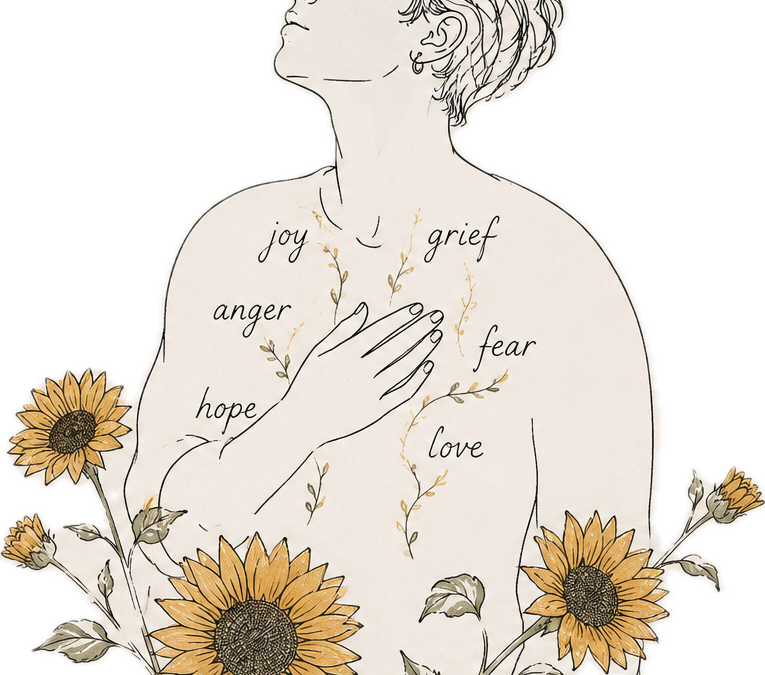
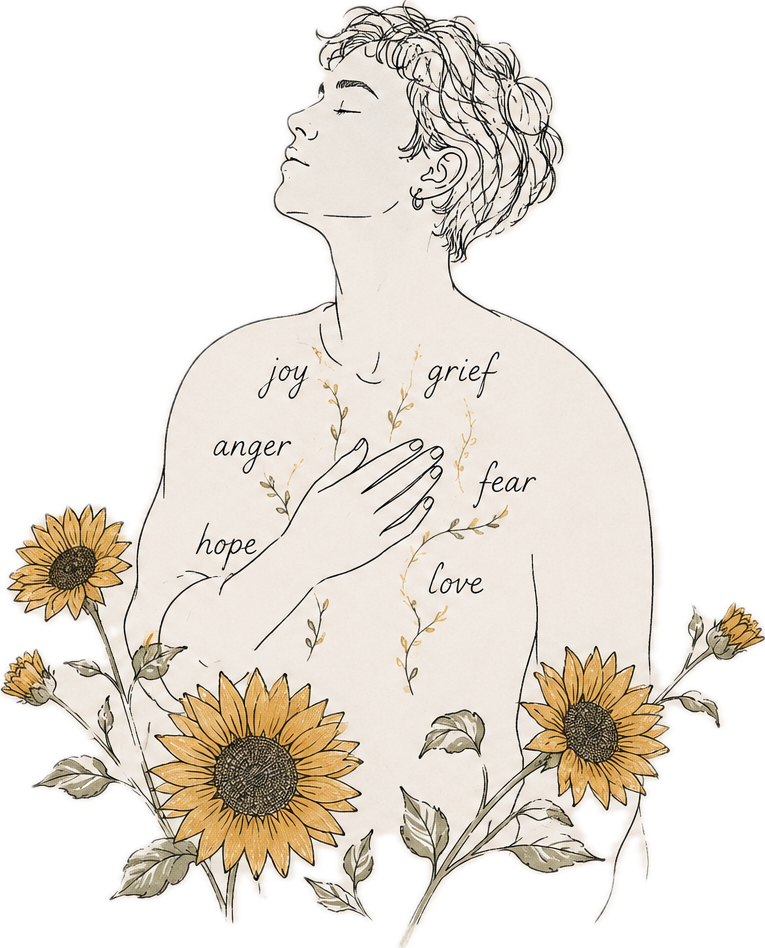
For joy. For grief. For anger. For fear. For hope. For love.
Because what stays inside festers. What festers rots.
What is witnessed, felt, named and gently held begins to heal.
And perhaps healing has never been about becoming someone who no longer cries.
Perhaps it is about becoming someone who no longer fears their own tears.