If you’re wondering how Walk and Talk therapy works, or
… it sounds like something that interests you and would like to try, read on.
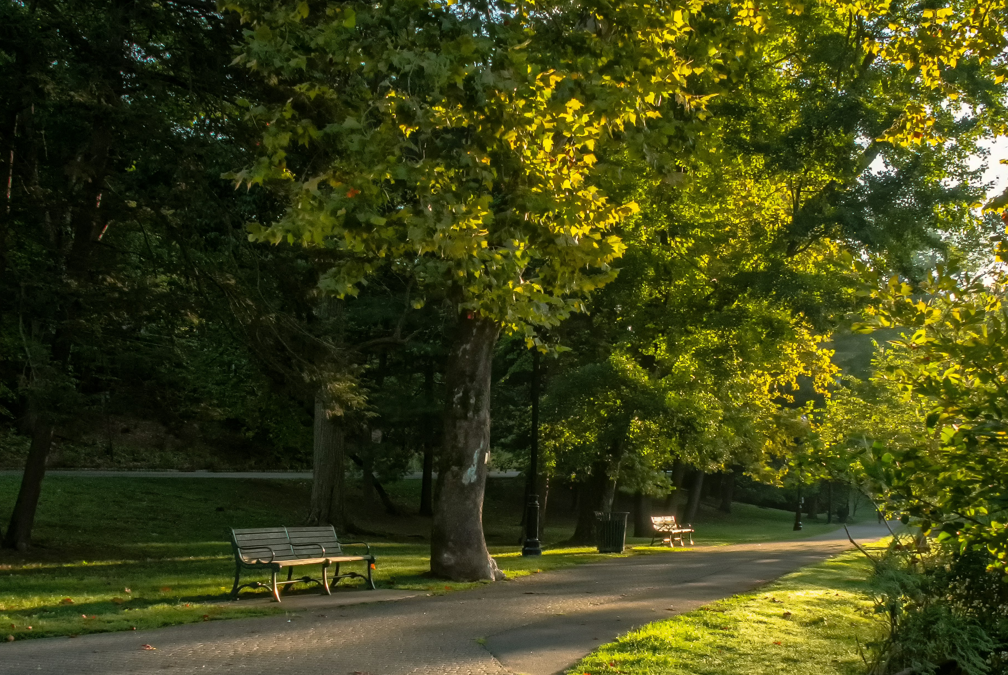
Walk and Talk therapy is essentially the same as seeing a counsellor in their consulting room or by online or phone appointment, except sessions are conducted outside in a park or walking trail.
During a walk and talk therapy session, you set the pace, decide which direction to take, and where you might like to stop to pause and take in the surroundings.
Along the way, the counsellor listens while drawing on trauma-informed, evidenced based therapies designed to attend to your mental health. These might include person-centred therapy, focusing oriented therapy, or emotion focused therapy. Another might be cognitive-based or nature/eco therapy. Each counsellor tailors sessions to your mental health issues and needs, and in accordance with their training, background and style.
Sometimes walking side by side rather than being face to face can create just the right amount of space for feelings or insights to emerge.
Think of nature as your co-therapist. It too can act as a steady, non-judging companion.
Being in the natural outdoors provides many opportunities for reflection, metaphor and incidental prompts. The weather, for example, can be akin to our internal emotional world, sunny and bright one day, raining and miserable on another.
If the weather forecast is grim, alternatives will be discussed.
Walk and Talk therapy is not exercise. The priority is your mental health and the issues you bring. This kind of therapy is beneficial for people who enjoy walking.
Perhaps you’d like a change from the usual counselling format, or you find being seated inside for the duration of a whole session a challenge. Or you might struggle with prolonged eye contact. Or be the kind of person who does better with movement and just being outdoors.
Sessions are suited to your preferences. Your counsellor will discuss if you prefer to walk to a park bench and sit down, or spend time both walking and sitting, or if you simply prefer walking continuously. You will also discuss appropriate locations, and agree on a meeting place for your scheduled session.
Risks and Benefits of Walk and Talk Therapy
The therapist will discuss some important topics with you
before your first session, including potential confidentiality issues:
“…What if we focused our attention on how our feet, buttocks, or whole bodies feel the connection to Gravity–the Earth’s primary energy. All we need to do is to shift our attention to where our bodies touch the ground and wait to notice what that sensation entails. Sometimes the area becomes energized, and sometimes we can feel energy outside the part of our body to which we are sending your attention. We shift our attention to a part of the body connected to the Earth and let go of the noise, thoughts and other stimuli. It will give us the ability to consciously connect to the Gravity of the Earth’s energy.
It may, at first, seem indiscernible, but with a bit of patience and willingness to hold our attention to our connection to the Earth, a bodily sensation will emerge.
… What we are doing is giving ourselves a chance to appreciate how nothing will get between us and the Earth no matter how hard we try. Gravity is always holding us, even in airplanes. So the first time we try connecting to Gravity, set goals aside and just experience what happens.
We can always take a few minutes out of our day to reconnect our body to the Earth. For example, sitting at a desk, reconnect to the floor below you. Standing at a bus stop,we connect feet to the ground below. Keep noticing how Gravity shows up . The act of recognizing grounding to Gravity as an energetic bond will strengthen our energetic connection to ourselves in any form of bodywork you do.
Potential confidentiality issues to discuss prior:
You are responsible for…
- Your physical wellbeing while the therapist handles therapeutic safety
- Wearing suitable clothing and footwear, and for staying hydrated
- Setting the walking pace of the walk and talk session. You may request to sit at a bench or withdraw from Walk and Talk therapy at any time
- Communicating if you are uncomfortable physically or emotionally while participating in Walk and Talk therapy. Note that alternative options (phone, online or in-person sessions) can be arranged with 24 hours notice
Walk and Talk therapy is neither exercise nor workout training.
Movement may be a benefit physically, but the focus is not about exercise.
You are also responsible for…
- Disclosing any medical conditions that would be detrimental to Walk & Talk Therapy. Please be aware that the therapist may not be able to offer you Walk and Talk therapy as an option.
- Obtaining approval from your doctor if GP if you have a medical condition that could affect your ability to participate a Walk and Talk session
The relationship between client and therapist continues
to be entirely professional and is not a social relationship.
A note about confidentiality
- Confidentiality may be limited at times due to public spaces. The therapist will make every effort to preserve client confidentiality and privacy during Walk & Talk sessions.
- With passersby or if you encounter a person you know, you have the right to disclose or not disclose that you are in a therapy session
- If you come into contact with a person the therapist knows, to preserve confidentiality the therapist will not acknowledge you as a client or the Walk & Talk session as a counselling session